Mastering ATPL
ATPL study guides for India, Canada and the UAE
The same revision-guide-and-question-bank approach as the EASA and UK CAA series, written to other authorities' own syllabi and rules. Each book teaches the paper that authority actually sets, with its regulations cited by paragraph.
By Matthew Dowell, airline training captain and Chief Flight Instructor. These are revision guides, not approved by any regulator. The regulations, the aeronautical information publications and your operator's manuals always take precedence.
India: DGCA
Written to the DGCA ATPL(A) syllabus, CAR Section 7 Series B Part VI, and the current AIP India. Three books, one for each appendix.
DGCA ATPL Air Navigation
Navigation, mass and balance, performance and flight planning in one volume, to Appendix A.
What is inside
- The Earth, Direction and Distance
- Time
- Magnetism and Compasses
- Charts
- Dead Reckoning and the Navigation Computer
- In-Flight Navigation, Range and Radius of Action
- EFIS, FMS, GPWS and TCAS
- Mass and Balance: Masses, Limits and Loading
- Centre of Gravity: Calculation, Load Shift and Securing
- Take-off Performance
- Climb, Cruise and Engine Failure En Route
- Descent, Landing and Using the Performance Manual
- The Navigation Plan and the Fuel Plan
- IFR Planning, the ATS Flight Plan, PET, PSR and ETOPS
DGCA ATPL Aviation Meteorology
Appendix B with a full chapter on Indian climatology: fog, the monsoon and the cyclone months.
What is inside
- The Atmosphere, Temperature, Pressure and Density
- Altimetry
- Wind
- Jet Streams, Clear Air Turbulence and the Tropopause
- Thermodynamics
- Clouds, Fog and Precipitation
- Air Masses and Fronts
- Pressure Systems and Tropical Revolving Storms
- World Climatology
- Indian Climatology
- Flight Hazards: Icing, Turbulence, Windshear, Mountains and Visibility
- Thunderstorms and Tornadoes
- Observations, Reports and Weather Charts
- Forecasts, Warnings and the Weather Briefing
DGCA ATPL Radio Aids and Instruments
Appendix C, with GAGAN, PBN and the Indian equipment requirements.
What is inside
- Radio Waves, Antennas and Propagation
- Ground Direction Finding, the NDB and the ADF
- VOR, Doppler VOR and DME
- The Instrument Landing System
- Radar Principles, Ground Radar and SSR
- Airborne Weather Radar
- Area Navigation, GNSS and PBN in India
- Inertial Navigation and Reference Systems
- Pitot-Static Systems, the Altimeter and the VSI
- Airspeed, Mach Number and the Air-Data Computer
- Gyroscopes, Compasses and the Radio Altimeter
- Flight Director, Autopilot and Automatic Flight Control
- Warning and Recording Equipment
- Engine and System Instruments and Electronic Displays
Canada: Transport Canada
Written to the Transport Canada ATPL(A) study guide TP 690, in Canadian English, products and units. Two books cover the whole guide.
Transport Canada ATPL SARON
Air law, aeroplane operation and navigation: the first Transport Canada ATPL examination.
What is inside
- The Canadian Aviation Regulations: Framework, Licensing and Medical
- Airspace and the General Operating Rules
- Flight Preparation, Emergency Equipment, Aerodrome Operations and VFR
- Instrument Flight Rules, Communications Failure and ATC Procedures
- Aircraft Requirements, the MEL and Technical Records
- Private Operators, Commercial Air Services, Approach Bans and Fatigue Management
- Commuter and Airline Operations
- Airframes, Wing Systems and Flight Controls
- Power Plants and Propellers
- Aircraft Systems and Warning and Protection Systems
- Instruments
- Navigation: General
- Flight Operations: The Atmosphere, Speeds, Range and Handling
- Charts and Graphs: Loading and Performance for a Two-Crew Aeroplane
- Winter and Hazard Operations: Surface Contamination, Wake, Ash, Storms and Upsets
- Theory of Flight
- Human Factors: Physiology, Health and Fitness
- Human Factors: Decisions, Automation, Crew Resource Management and Threat and Error Management
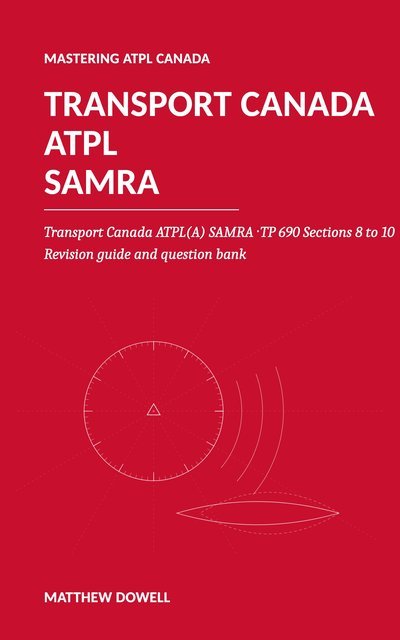
Transport Canada ATPL SAMRA
Meteorology, radio aids and flight planning, in Canadian products and units.
What is inside
- The Atmosphere, Pressure and Altimetry
- Temperature, Moisture and Stability
- Clouds, Fog and Surface-Based Layers
- Wind and Jet Streams
- Air Masses, Fronts and Frontal Weather
- Hazards: Turbulence, Icing and Thunderstorms
- Canadian Weather Services and Reports: FIC, ATIS, VOLMET, METAR, SPECI, AWOS and PIREP
- Canadian Aviation Forecasts: TAF, GFA, AIRMET, SIGMET and Upper Winds
- Weather Maps and Prognostic Charts
- Fuel Requirements, Fuel Load and Weights
- The Critical Point and En Route Decisions
- Flight Plans, Flight Itineraries, Aeronautical Information and NOTAM
- Computerized Flight Plans, Canadian Routes and Oceanic and Polar Procedures
- Radio Theory, Transceivers and SELCAL
- Navigation Systems: ADF, VOR, DME, GNSS, RNAV and Inertial
- Approach Aids, Surveillance, Transponders and Weather Radar
- Emergency Locator Transmitters and ACAS/TCAS
United Arab Emirates: GCAA
Written to the UAE General Civil Aviation Authority (GCAA) syllabus for Air Law (010) and Operational Procedures (070), with UAE rules and procedures cited by paragraph.
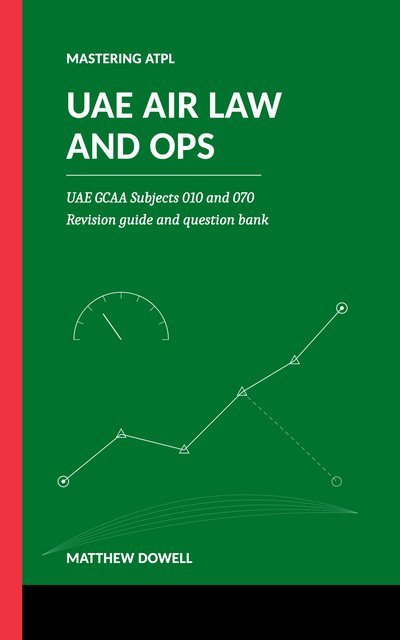
ATPL Air Law and Operational Procedures, UAE
Both papers in one book, with UAE rules and procedures cited by paragraph.
What is inside
- The UAE Aviation System: the Law, the GCAA and the CARs
- Licensing under CAR-FCL, and Converting a Foreign Licence
- CAR-MED and the Psychoactive Substances Programme
- Rules of the Air and Flight Procedures in the Emirates FIR
- Airspace, Air Traffic Services, AIS and Aerodromes
- Commercial Air Transport under CAR-AIR OPS
- Flight and Duty Time Limitations: the UAE Scheme
- Security, Facilitation, Search and Rescue, and Dangerous Goods
- Accident and Incident Investigation, and Occurrence Reporting
Frequently asked questions
Which books cover which authority?
Three books cover the India DGCA ATPL(A) papers: Air Navigation (Appendix A), Aviation Meteorology (Appendix B) and Radio Aids and Instruments (Appendix C). Two books cover the Transport Canada ATPL(A) study guide TP 690: SARON (sections 1 to 7) and SAMRA (sections 8 to 10). One book covers the UAE GCAA Air Law (010) and Operational Procedures (070) papers.
Are these books approved by the regulator?
No. They are revision guides and are not approved by any regulator. The regulations, the aeronautical information publications and your operator's manuals always take precedence, and your training organisation will tell you the current exam rules.
How are they different from the EASA and UK CAA books?
The approach is the same: a complete revision guide and question bank. But each book is written to that authority's own syllabus and rules instead of the EASA ones, teaches the paper the authority actually sets, and cites its regulations by paragraph. The India and Canada books also use local material, such as Indian climatology and Canadian weather products and units.
Where can I buy them?
The ebooks are on Apple Books, Kobo, Barnes & Noble and other stores through the Ebook, all stores links. Paperbacks are coming soon.
I am studying for the EASA or UK CAA ATPL. Where are those books?
See the subject-by-subject guide to the 14 EASA and UK CAA Mastering ATPL books.
Studying for the EASA or UK CAA ATPL?
The Mastering ATPL series has 14 books, one for each EASA and UK CAA theory subject.
The EASA and UK CAA subject-by-subject guide Free competency self-assessment sheet